VA Assumable Loans: The Secret Weapon for Military Buyers in NW Florida
VA assumable loan NW Florida, VA loan assumption Eglin AFB, military home buying Niceville FL, assumable mortgage NW Florida, VA loan Hurlburt Field
VA Assumable Loans: The Secret Weapon for Military Buyers in NW Florida
Military families PCSing to Eglin AFB, Hurlburt Field, or Duke Field are entering one of the tightest, most competitive housing markets in the country—right as mortgage rates hover in the mid‑6% range. Yet there is a powerful, underused strategy that can put you back into the 2.5%–3.5% world: assuming an existing VA loan at the seller’s original rate.
1. Introduction — The Rate You Can’t Get Anywhere Else
If you walked into a lender today and asked for a 30‑year fixed VA loan at 3%, you’d be told it doesn’t exist. National data from Bankrate, NerdWallet, and Experian show average 30‑year VA purchase APRs in late July 2026 running roughly 6.4%–6.6%, with some quotes just above 6% at the low end. In other words, 3% is gone for new loans.
But that 3% world still lives inside thousands of existing VA mortgages across Northwest Florida—especially around Niceville, Fort Walton Beach, Navarre, Crestview, and Destin, where veteran homeownership is high and PCS moves are constant. If you assume one of those loans, you can legally step into the seller’s rate and payment instead of taking today’s 6‑plus percent environment on the chin.
For a typical $350,000–$400,000 loan balance, that difference can mean $400–$800 per month back in your budget. In a market where BAH is being stretched by rising prices and limited inventory, that is not a “nice to have”—it can be the difference between buying comfortably and feeling overextended every month you’re stationed here.
2. What Is a VA Assumable Loan?
A VA assumable loan is a VA mortgage that a qualified buyer can take over—or “assume”—from the current owner. Instead of getting a brand‑new loan, you step into their existing one. In plain English, that means:
- Same interest rate — If the seller locked 2.75% in 2021, you get that 2.75% today.
- Same remaining balance — You take over what’s left on their loan, not the full purchase price.
- Same term — You pick up where they are in the 30‑year schedule. If they’ve paid five years, you inherit a 25‑year remaining term (unless the servicer adjusts it).
The VA allows assumptions as long as the lender or servicer approves the new buyer and the correct paperwork and fees are handled. This is not a private side deal between you and the seller—the lender is involved, your credit and income are reviewed, and a formal approval is required before the assumption is complete. Done correctly, the seller is released from liability, and you become the new borrower on that VA note at that original low rate.
3. The Math That Changes Everything
Let’s look at real numbers, using a $350,000 remaining balance—a realistic loan size for many single‑family homes near Eglin AFB and Hurlburt Field. We’ll compare a typical existing VA rate of 2.75% to a current market rate of roughly 6.5% for a new VA loan in mid‑2026 (based on national averages from Bankrate and NerdWallet).
For simplicity, assume a 30‑year term and ignore taxes and insurance (which are the same either way):
- Scenario A — Assume at 2.75%
Principal & interest on $350,000 at 2.75% ≈ $1,430/month. - Scenario B — New loan at 6.5%
Principal & interest on $350,000 at 6.5% ≈ $2,213/month.
That’s a monthly difference of roughly $783. Over just three years of a typical tour, you’ve kept more than $28,000 in your pocket. Over a full 30‑year horizon, the interest savings are six‑figure territory—easily $150,000+ compared with borrowing the same amount at 6.5%.
The savings are similar on a $400,000 balance. At 3% vs 6.5%, it’s common to see $400–$800 per month in payment difference, depending on the exact rate and remaining term. For many ranks, that’s the gap between staying comfortably inside BAH and dipping into out‑of‑pocket funds every month just to cover housing.
There is also a funding‑fee advantage. On a new VA purchase, most first‑time users pay a funding fee of 2.15% of the loan amount, and subsequent use can be as high as 3.30%. On a $350,000 loan, that’s $7,525–$11,550, often rolled into the loan. On a VA assumption, the VA funding fee is currently 0.5%—about $1,750 on that same $350,000 balance. You’re saving thousands up front before you even get to the monthly payment difference.

Assuming a low-rate VA loan can cut monthly payments by hundreds of dollars.
4. Who Can Assume a VA Loan?
One of the biggest misconceptions we hear from buyers is, “I thought only veterans could assume a VA loan.” That’s not accurate. The VA itself confirms that both veterans and non‑veterans can assume a VA loan, as long as they meet the lender’s requirements and the VA’s guidelines (see VA.gov and Military.com guidance on VA loan assumptions).
- Veterans and active‑duty service members — Can assume and, in many cases, substitute their own VA entitlement for the seller’s (more on that below).
- Civilians and military spouses — Can also assume a VA loan if they qualify on credit, income, and debt‑to‑income ratio with the lender or servicer. They do not bring VA entitlement to the table, but they can still benefit from the low rate and terms.
Regardless of military status, you must qualify financially. The lender will underwrite you much like they would for a new loan—reviewing credit scores, income stability, DTI, and overall risk. The property must also be used as your primary residence, not a vacation home or pure investment property. For many PCSing families planning to live near Eglin AFB or Hurlburt Field for three or more years, that primary‑residence requirement is easy to satisfy.
5. The Equity Gap: What Buyers Need to Know
The main trade‑off with an assumable mortgage in NW Florida is the equity gap—the difference between the seller’s remaining loan balance and the agreed‑upon purchase price. You can’t assume more than the existing balance, so you must cover that gap with cash or secondary financing.
Example: A Niceville home is listed at $475,000. The seller bought earlier in the market cycle and now has a remaining VA balance of $340,000 at 2.75%.
- Purchase price: $475,000
- Remaining VA loan: $340,000 (assumable at 2.75%)
- Equity gap: $135,000
You must bring that $135,000 to the table—either as cash, a second mortgage, or another creative structure that the lender and VA will approve. Many buyers don’t have that kind of liquid cash, but in some cases, the gap is much smaller. Think of homes where the seller bought more recently, or where appreciation has been modest. In those situations, the equity gap might be $30,000–$60,000, which is far more manageable for dual‑income military households or buyers with proceeds from a previous home sale at another duty station.
6. Entitlement: The Seller’s #1 Concern
For the seller, the biggest question is not the rate—it’s their VA entitlement. When a veteran uses a VA loan, a portion of their entitlement is tied up in that property. If someone else assumes the loan, what happens to that entitlement depends on who the buyer is and how the assumption is structured.
- Best case for the seller: veteran buyer substitutes entitlement.
If you are a qualified veteran or active‑duty buyer using your own entitlement, the VA can substitute your entitlement for the seller’s. When done correctly, the seller’s entitlement is restored, freeing them to use a new VA loan on their next home—sometimes at their next duty station or retirement location. - Civilian assumption: seller’s entitlement stays tied up.
If a civilian assumes the loan without VA entitlement, the seller’s entitlement usually remains locked in that mortgage until it’s paid off or refinanced. That’s a major decision for a military seller who may need their benefit for future purchases.
In all cases, the seller should insist on a formal Release of Liability from the lender or servicer. Without it, they could remain on the hook if the new buyer defaults—even if the property has changed hands. As a buyer, you also want that release documented; it signals the lender has fully approved the assumption and recognizes you as the responsible borrower going forward.
7. How to Find Assumable VA Loans in NW Florida
Not every VA loan is advertised as assumable, even though most are. The key is knowing how to search and which questions to ask. In Northwest Florida, the highest density of VA‑backed homeowners is in communities surrounding the bases—Niceville, Fort Walton Beach, Navarre, Crestview, Destin, and nearby neighborhoods. That’s where the best assumable mortgage NW Florida opportunities tend to surface.
- MLS searches by loan type. Many agents fail to filter for “VA financing accepted” or “VA loan in place.” We regularly scan the MLS for listings where the existing loan is VA and dig deeper to see if the seller and servicer are open to an assumption.
- Targeted outreach. In some cases, we contact listing agents directly to ask about the seller’s loan type, rate, and willingness to consider an assumption as part of a competitive offer package.
- Local knowledge. Military home buying Niceville FL is a specialized niche. Agents who work this corridor every day know which neighborhoods have a high concentration of VA‑financed homes and which sellers are most motivated to leverage their low rate as a selling advantage.
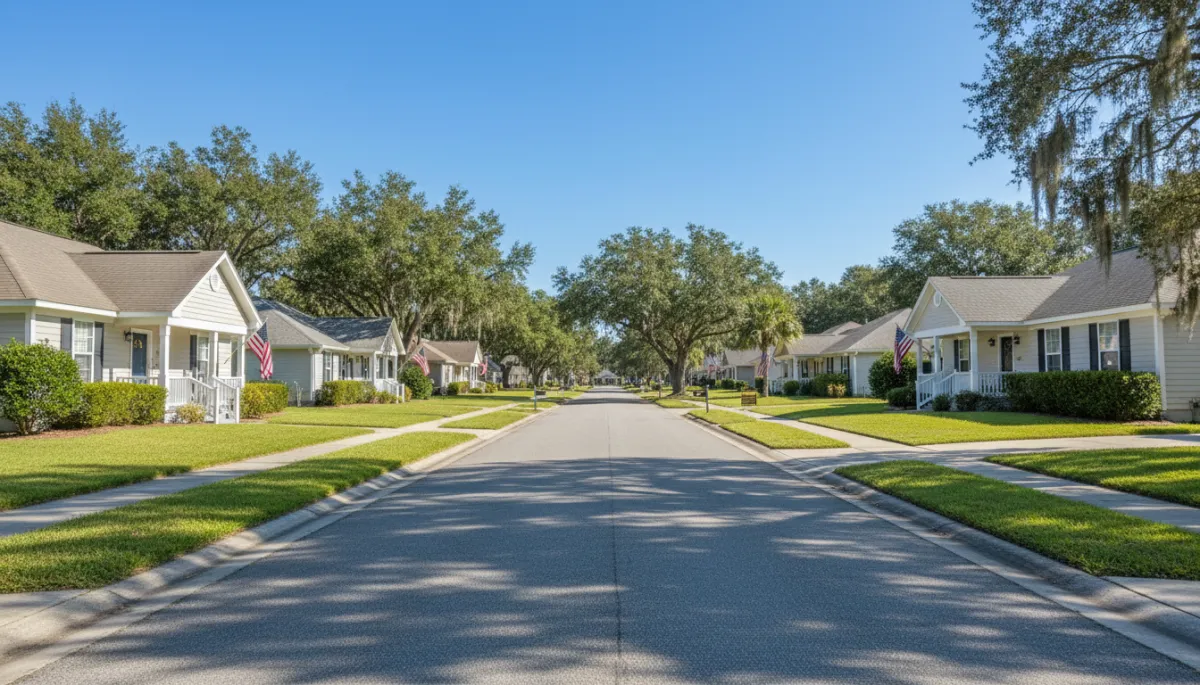
Neighborhoods near Eglin and Hurlburt hide VA loans with valuable sub‑3% rates.
8. The Timeline: Plan for 45–120 Days
A standard financed purchase in this market might close in 30–45 days. A VA loan assumption often takes longer—45 to 120 days is a realistic range, depending on the lender or servicer’s responsiveness and backlog. That extended timeline is critical for PCS buyers who are balancing report‑no‑later‑than dates, temporary lodging, and school start times for kids.
When we write offers involving a VA loan Hurlburt Field or Eglin AFB assumption, we:
- Build the longer assumption timeline directly into the contract, so everyone’s expectations are aligned from day one.
- Coordinate early with the loan servicer to obtain their assumption packet and checklist, which can vary by institution.
- Help you prepare documentation—LES, tax returns, bank statements, and other income proofs—so underwriting doesn’t stall.
The upside is worth the wait. If you can lock in a payment hundreds of dollars lower than a new loan while you’re stationed here, a few extra weeks in the process is usually a very rational trade for long‑term savings and stability.
9. Is a VA Loan Assumption Right for You? — Quick Checklist
A VA loan assumption is not the right fit for every buyer. Use this quick checklist as a starting point:
- You’re PCSing to Eglin AFB, Hurlburt Field, or Duke Field and expect to stay at least 3–5 years.
- You have strong credit and stable income that should easily pass lender underwriting standards.
- You can cover the equity gap—either with cash from savings or sale proceeds, or with an approved second mortgage structure.
- You’re willing to accept a longer closing timeline (45–120 days) in exchange for a lower payment.
- You value monthly payment stability and want to stay as close to or below BAH as possible, even as insurance and taxes rise.
If you check most of these boxes, it is worth having a focused strategy session around VA loan assumption Eglin AFB and Hurlburt Field options before you default to a brand‑new 6‑plus percent mortgage.
10. How The Schultz Team Helps Military Buyers
The Schultz Team at Coldwell Banker Realty in Niceville focuses heavily on military home buying Niceville FL and the broader NW Florida corridor. We work daily with active‑duty members, veterans, and military spouses navigating PCS timelines, BAH constraints, and the realities of a high‑demand coastal market with limited housing supply near the bases.
- Identifying assumable opportunities. We filter MLS data, talk directly with listing agents, and flag homes where an existing VA loan may be assumable at a below‑market rate.
- Running the numbers. We compare assumption versus new‑loan scenarios, including funding fees, equity gap, monthly payments, and projected savings over your likely tour length—not just over 30 years on paper.
- Structuring offers that sellers accept. We address entitlement, release of liability, and timeline concerns up front, so your offer is clear, credible, and respectful of the seller’s needs.
- Coordinating with lenders and servicers. We stay engaged with the assumption process, helping you navigate paperwork and keep your transaction moving—even when servicers are slow to respond.
Our goal is straightforward: help you leverage every benefit you’ve earned—including VA assumable loans—so your housing decision in Northwest Florida supports your mission, your family, and your long‑term financial picture.
11. Call To Action — Talk Through Your PCS Plan
If you’re receiving orders to Eglin AFB, Hurlburt Field, or Duke Field—and you want to know whether a VA assumable loan could realistically save your family $400–$800 per month on housing—the next step is a focused, numbers‑driven conversation tailored to your rank, BAH, and timeline.
Contact The Schultz Team at Coldwell Banker Realty:
- Phone: (850) 461-3717
- Office: 350 W John Sims Pkwy, Suite 402, Niceville, FL 32578
- Website: theschultzteam.com
Before you sign for a 6‑plus percent mortgage in one of the most competitive military housing markets in the country, make sure you’ve explored the VA assumable loan NW Florida opportunities hiding in plain sight. You may not be able to ask a lender for 3% today—but you can still buy it, if you know where to look and how to structure the deal.