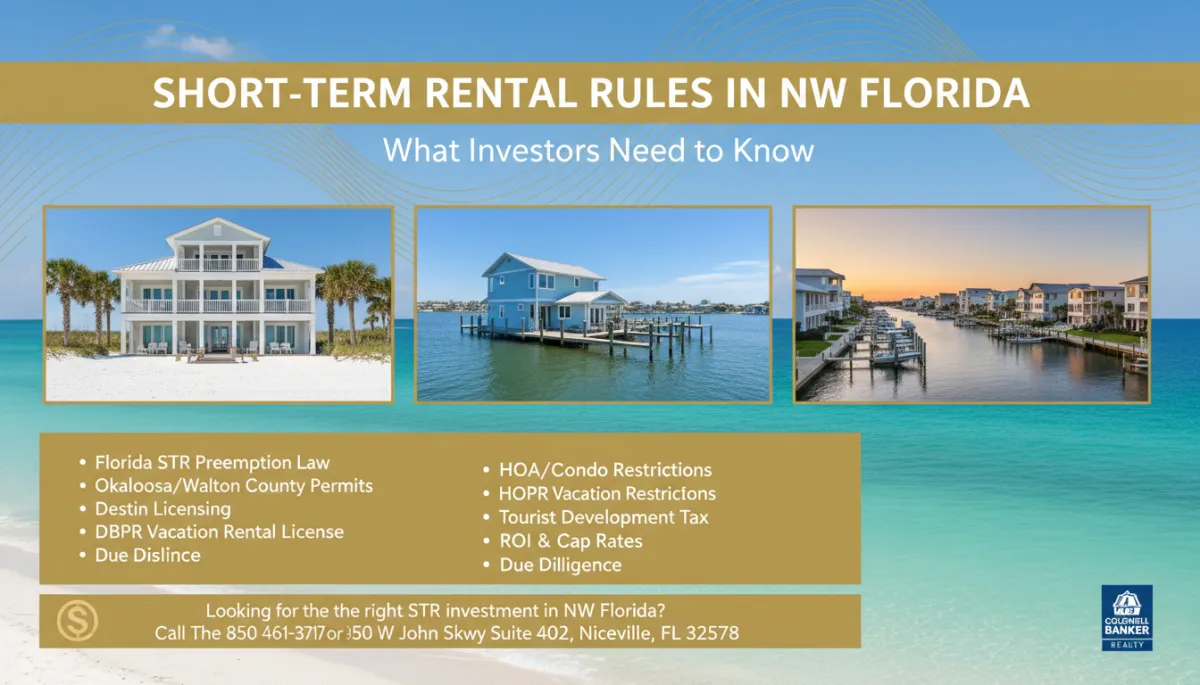
NW Florida Short-Term Rental Rules for Investors
Real Estate Investing, NW Florida Short-Term Rental Rules
Short-Term Rental Rules in NW Florida: What Investors Need to Know
Northwest Florida is one of the strongest vacation rental markets in the country—but it is also one of the most regulated. Understanding how state law, county rules, city licensing, and HOA restrictions all fit together is essential before you buy an Airbnb or VRBO property in this region. This guide breaks down the key regulations and due diligence steps The Schultz Team at Coldwell Banker Realty recommends for serious investors.
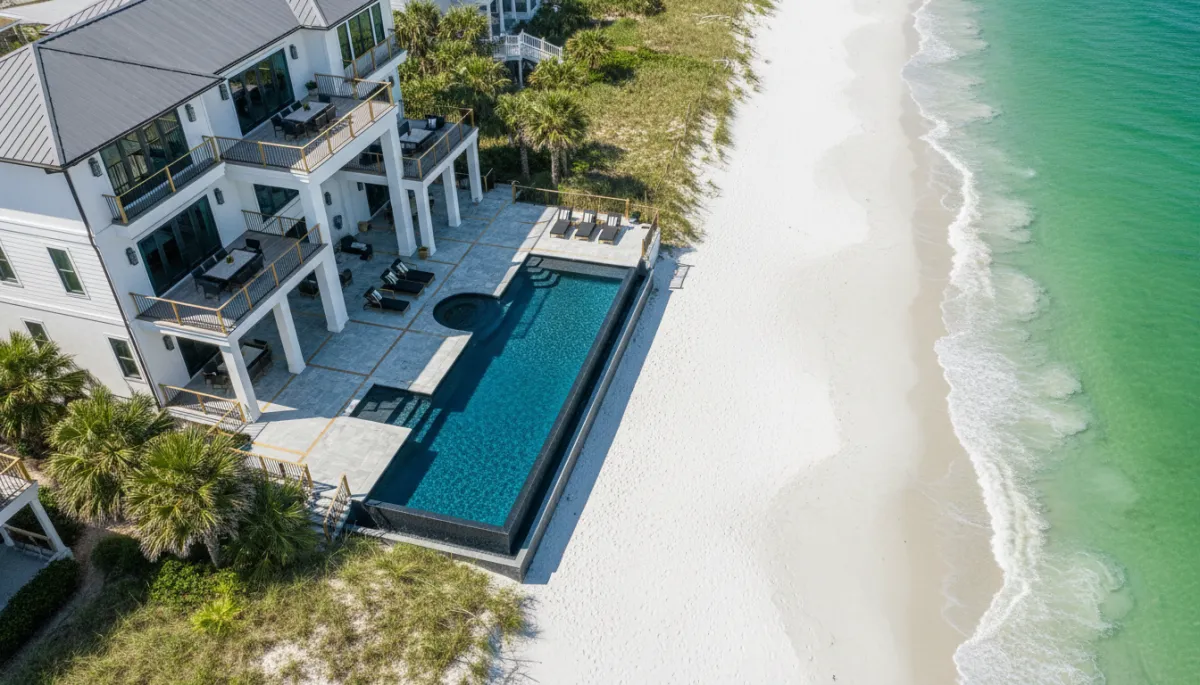
1. How Florida’s State STR Preemption Shapes Local Rules
Florida’s short-term rental framework starts at the state level. Under Florida Statute 509.032(7)(b), the state has preempted local governments from passing ordinances that prohibit vacation rentals or regulate their length or frequency if those rules were adopted after June 1, 2011. In practical terms, this means cities and counties in NW Florida cannot simply ban vacation rentals or limit you to a certain number of rental nights per year, provided the underlying zoning allows transient use.
However, that same statute still allows local governments to regulate zoning, registration, inspections, safety, and tax compliance. Counties like Okaloosa and Walton have used that authority to build detailed registration and life-safety programs, while still respecting the state’s preemption. Recent 2026 legislative activity did not change this core structure, so the preemption framework remains intact. For investors, the takeaway is clear: you must analyze both state-level and local requirements when evaluating NW Florida short-term rental rules.
2. Okaloosa County STR Permit Requirements and Process
In unincorporated Okaloosa County—covering areas outside city limits such as parts of Okaloosa Island—short-term rentals must register with the County and obtain an annual decal. Any rental of less than six months is treated as a vacation rental, and owners must first secure the appropriate Florida Department of Business and Professional Regulation (DBPR) lodging license before applying locally (myokaloosa.com).
The County’s STR registration window runs January through March each year. Fees are tiered by square footage and property type, typically ranging from $500–$700 per year for most single-family homes and condos, plus a small administrative fee. Registrations filed after June 1 are subject to a $500 late fee, which can materially impact your first-year cash flow if you miss the deadline (ordinancewatch.com). Once approved, you receive a decal that must be displayed and renewed annually. Okaloosa also reserves the right to conduct inspections and enforce occupancy, parking, and waste rules to protect neighborhood character.
3. Walton County (30A/South Walton) Regulations and Strict Enforcement
Unincorporated Walton County, home to the coveted 30A corridor and South Walton beach communities, operates one of the most detailed and strictly enforced vacation rental programs in NW Florida. Any property rented for less than 30 days—or marketed as a vacation rental—must obtain a Short-Term Vacation Rental Certificate, renewed annually via the County’s online portal (mywaltonfl.gov; library.municode.com).
To qualify, owners must show proof of Florida Department of Revenue and Tourist Development Tax registration, as well as the appropriate DBPR license, and sign an affidavit confirming compliance with state and local codes. Walton then layers in stringent life-safety standards: compliant pools and spas, smoke detectors, floor-by-floor fire extinguishers, emergency lighting, and maximum occupancy based on both square footage and parking. They also require a local responsible party available 24/7 who can respond on-site within one hour, plus extensive in-home postings covering noise rules, trash schedules, beach safety, and evacuation procedures.
Walton County actively enforces these rules through inspections, complaints, and a progressive code-enforcement process. For investors targeting 30A, this is not a “set it and forget it” market. You should budget for professional management that understands Walton’s program and factor compliance costs into your underwriting; in return, you benefit from a high-barrier, high-demand destination with strong nightly rates and occupancy.
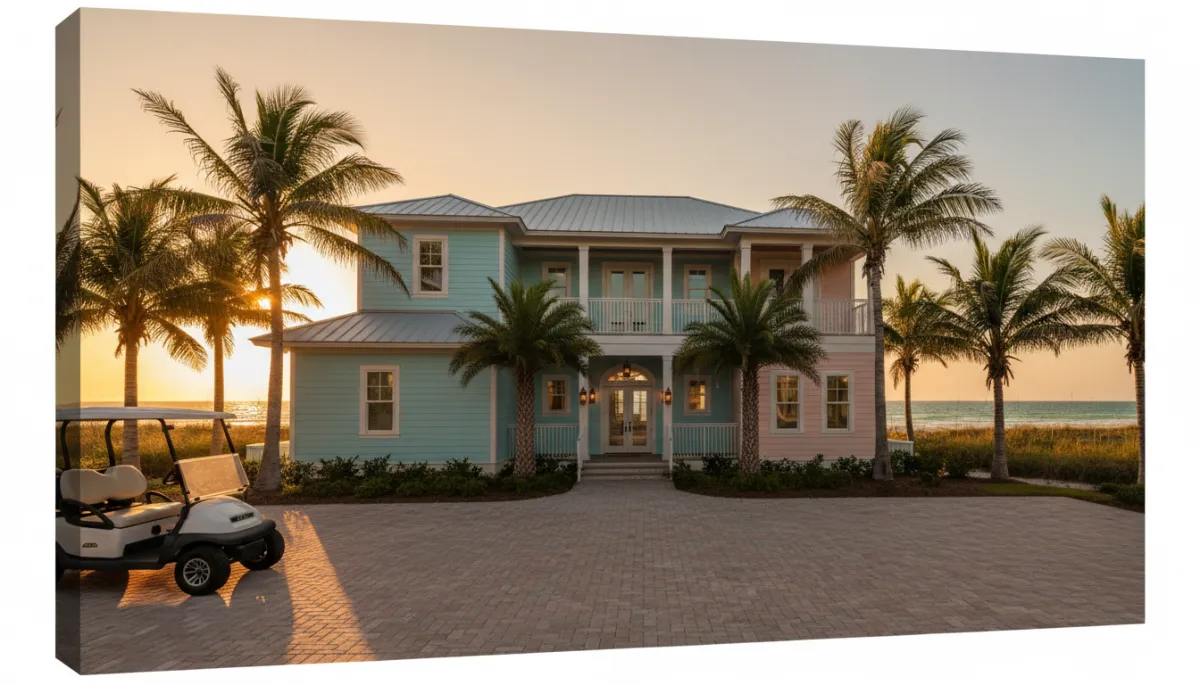
Well-located Destin homes can pair strong demand with strict but manageable STR rules.
4. City of Destin Short-Term Rental Licensing Requirements
The City of Destin—one of the most recognizable names in Emerald Coast tourism—adds its own layer of regulation on top of state law and Okaloosa County tax rules. Destin requires short-term rental operators to obtain a city business tax receipt and a specific vacation rental license or registration, depending on zoning and property type. The city regulates occupancy, parking, and nuisance issues to protect residential neighborhoods, and it can suspend or revoke STR permissions for repeated violations.
For a Destin vacation rental investment, you must confirm that the property is in a zoning district that allows transient use and then follow the city’s application process, which typically includes proof of DBPR licensing, tax registrations, and contact information for a local responsible party or property manager. Destin has become increasingly data-driven in enforcement, monitoring booking platforms and responding to neighbor complaints, so compliance is not optional. Done correctly, though, the combination of high tourist demand, HarborWalk Village attractions, and Gulf-front amenities can deliver excellent performance.
5. HOA and Condo Association Restrictions: How to Check Before You Buy
Even when state and local law allow short-term rentals, HOAs and condo associations can still restrict or prohibit them. Their rules are contractual, not governmental, so they are not affected by Florida’s STR preemption statute. Many waterfront condo buildings and planned communities in NW Florida have minimum lease terms (often 30, 60, or 90 days), owner-occupancy requirements, or caps on the number of units that may operate as vacation rentals at any given time.
Before you go under contract on a vacation rental property NW Florida, you should:
- Obtain and review the Declaration of Covenants/Condo Declaration, bylaws, and rules and regulations for any HOA or condo association.
- Ask the association in writing whether short-term rentals under 30 days are allowed and whether there are any current or pending amendments to those rules.
- Confirm any booking caps, guest registration fees, parking limits, and pet policies that could impact your revenue or guest experience.
The Schultz Team routinely helps investors obtain and interpret association documents so you are not surprised after closing by a rule that eliminates your STR strategy.
6. Florida DBPR Vacation Rental License Requirements
Every short-term rental in NW Florida must hold the right DBPR license under Chapter 509, Florida Statutes. Most single-family homes, townhomes, and condos rented to guests more than three times per year for periods of less than 30 days require a Vacation Rental – Dwelling or Vacation Rental – Condo license. You may license units individually or as a group, depending on your portfolio and management structure. DBPR is responsible for inspections and high-level lodging standards statewide, and it can suspend or revoke licenses for serious violations, including sanitation or safety issues.
In addition to the DBPR lodging license, you will typically need a Florida sales tax certificate, a Department of Revenue transient rental account, and the appropriate local business tax receipts. Many platforms like Airbnb and VRBO collect and remit some state-level taxes on your behalf, but you remain responsible for proper licensing and any taxes not handled by the platform. Your licensing and tax structure should be finalized before you accept your first guest.
7. Tourist Development Tax Obligations by County
In addition to state sales tax, NW Florida short-term rentals are subject to local Tourist Development Tax (TDT), sometimes called “bed tax.” In Okaloosa County, rentals under six months must file TDT returns monthly with the Clerk of Courts, generally due on the 1st of each month, with penalties after the 20th (okaloosaclerk.com). The rate is currently 6% in the primary tourism district (including Destin and Fort Walton Beach) and 5% elsewhere in the county (library.municode.com).
Walton County, Santa Rosa County (Navarre Beach), and Bay County (Panama City Beach) each have their own TDT rates and filing portals. Some booking platforms remit TDT automatically in certain jurisdictions, while in others you must file and pay directly. From an investment standpoint, TDT is a pass-through expense charged to guests, but compliance and timely filing are critical to avoid penalties and liens that can cloud title or disrupt cash flow.
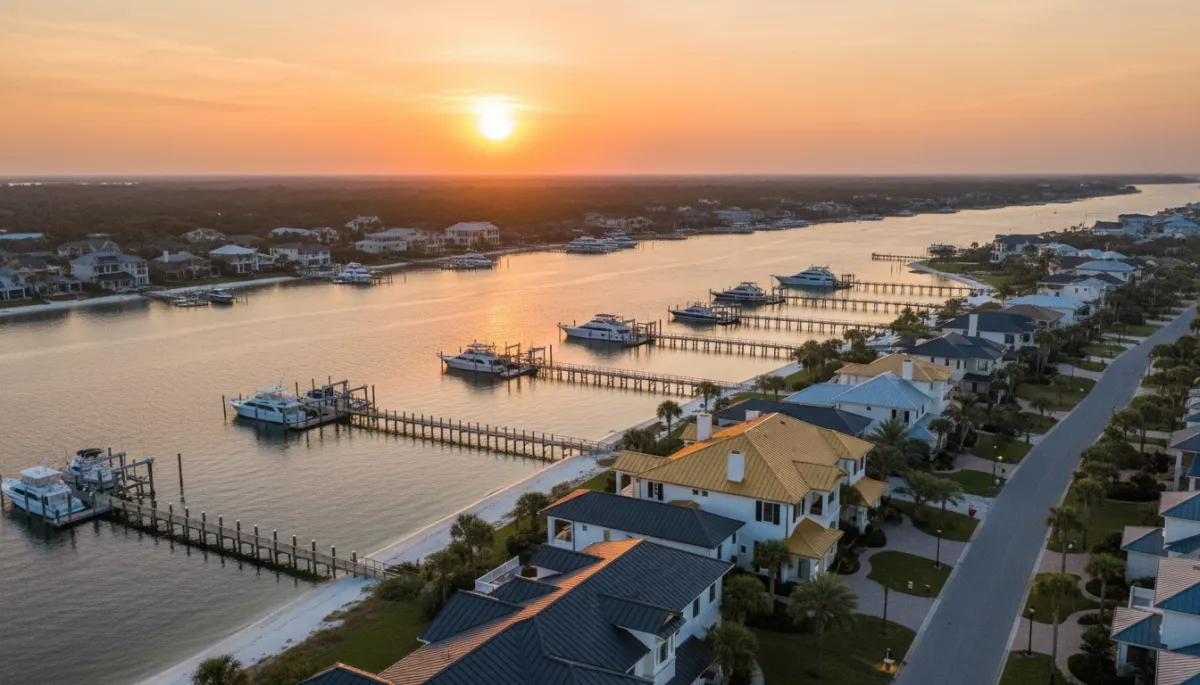
Waterfront neighborhoods can command premium nightly rates but demand careful tax and licensing planning.
8. Best NW Florida Neighborhoods and Areas for STR Investment
While regulations are important, location still drives revenue. Some of the strongest-performing areas for vacation rental property NW Florida include:
- Destin HarborWalk Area: High foot traffic, charter boats, restaurants, and nightlife support excellent occupancy, especially for condos and townhomes within walking distance of HarborWalk Village.
- Okaloosa Island: Gulf-front and sound-front condos with strong repeat vacationer demand; pay close attention to existing covenants and zoning, especially in B-1 areas with legacy restrictions.
- 30A Corridor (South Walton): Blue Mountain Beach, Seagrove, Seacrest, Rosemary Beach, and nearby communities offer some of the highest average daily rates in the region, offset by higher buy-in prices and strict Walton County compliance requirements.
- Navarre Beach: A more relaxed, family-focused alternative with strong summer and spring break seasons and comparatively lower acquisition costs than 30A or Destin.
Each submarket has its own blend of seasonality, pricing power, and regulatory nuance. Working with a local team that understands both revenue potential and STR regulations Florida-wide is essential to selecting the right neighborhood for your goals.
9. Realistic ROI Expectations and Cap Rates in NW Florida
Investors are often drawn to headline numbers from top-performing weeks, but sustainable underwriting requires a full-year perspective. In today’s market, well-bought NW Florida short-term rentals typically pencil out to:
- Gross income multipliers in the 6–10x range (purchase price equal to 6–10 times annual gross rental income), depending on location and property condition.
- Net cap rates generally between 5% and 8% on an unlevered basis for stabilized properties, after accounting for management (often 18–25% of gross), utilities, insurance, property taxes, TDT administration, maintenance, and reserves.
- Leveraged cash-on-cash returns in the high single digits to low teens, assuming sensible down payments and interest rates, with upside from appreciation and strategic renovations.
Premium submarkets like Gulf-front 30A or Destin Harbor may trade at lower initial cap rates but offer stronger appreciation and exit liquidity. Emerging or slightly inland areas can provide higher yield at the cost of more variable occupancy. A disciplined pro forma, stress-tested for slower seasons and rising expenses (especially insurance), is non-negotiable for serious investors.
10. Key Due Diligence Steps Before Buying an STR Property
To navigate NW Florida short-term rental rules confidently, build the following checklist into every acquisition:
- Confirm zoning and use permissions: Verify that the property’s zoning district allows transient rentals and that no local moratoria or overlays affect it.
- Review county and city STR programs: Study Okaloosa County, Walton County, Destin, or other relevant local codes for registration, occupancy, parking, and safety rules, and estimate compliance costs.
- Analyze HOA/condo documents: Obtain and read all governing documents; confirm in writing that short-term rentals are allowed and ask about any pending rule changes.
- Model realistic revenue and expenses: Use conservative occupancy and ADR assumptions, include management, cleaning, utilities, insurance, taxes, licensing fees, and reserves for furnishings and capital items.
- Plan your licensing and tax strategy: Map out DBPR licensing, state sales tax, TDT, and local business tax receipts, and decide whether you or your manager will handle filings.
- Engage local experts: Work with an experienced NW Florida agent, property manager, and CPA who understand STR regulations Florida-wide and the nuances of each county and city.
A disciplined due diligence process not only protects you from costly surprises but also positions your property to outperform less professionally managed competition.
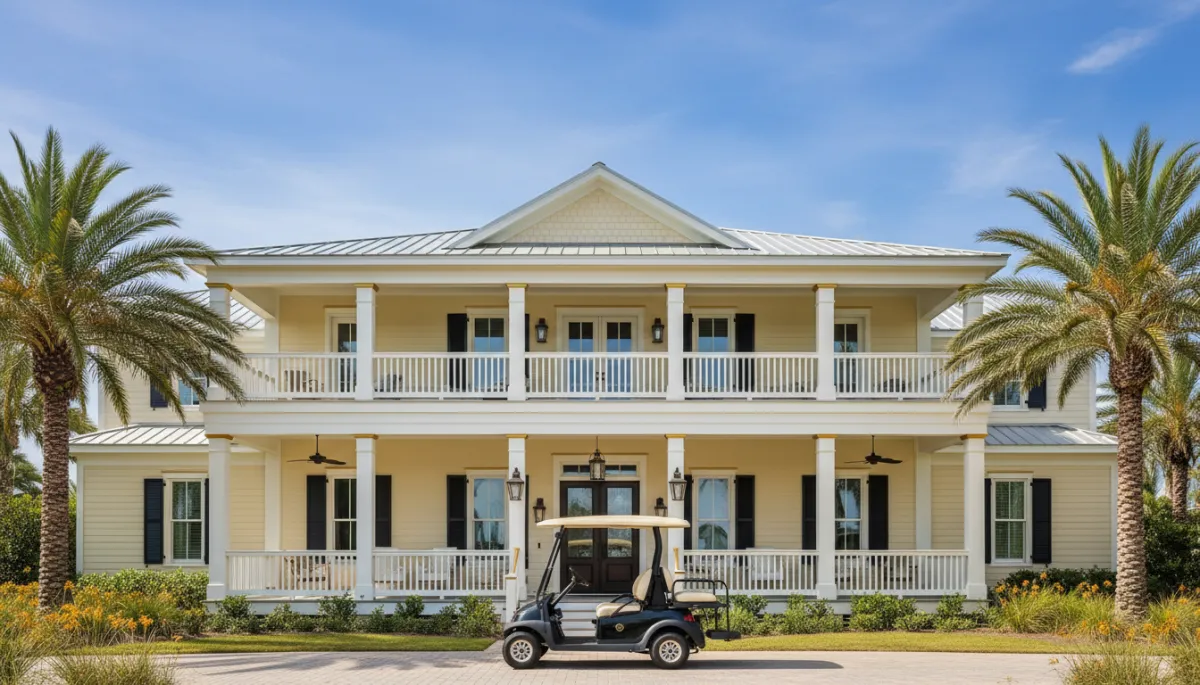
The right home, in the right location, with the right approvals can anchor a strong STR portfolio.
Partner with Local Experts for Your Next NW Florida STR Investment
NW Florida offers an exceptional combination of demand drivers—white-sand beaches, emerald waters, family-friendly attractions, and year-round tourism—backed by a clear but complex regulatory framework. Successful investors treat compliance as part of their business model, not an afterthought. By understanding state preemption, local registration programs, association rules, and the true economics of vacation rentals, you can build a resilient, high-performing portfolio along the Emerald Coast.
The Schultz Team at Coldwell Banker Realty in Niceville specializes in guiding investors through this landscape—identifying properties that align with your goals, screening for regulatory red flags, and connecting you with trusted local managers and advisors. Whether you are targeting a Destin vacation rental investment, a 30A luxury home, or a high-yield condo on Okaloosa Island or Navarre Beach, a knowledgeable local partner can be the difference between a smooth, profitable acquisition and an expensive learning experience.
Looking for the right STR investment in NW Florida? Call The Schultz Team at (850) 461-3717 or visit 350 W John Sims Pkwy Suite 402, Niceville, FL 32578.