
Navigate HOA Fees: Key Insights for 2026 Homebuyers
Real Estate, HOA Fees Northwest Florida, CDD Fees Florida
HOA Fees in Northwest Florida: What Homebuyers Need to Know in 2026
If you’re shopping for a home or condo in Pensacola, Destin, Fort Walton Beach, Navarre, 30A, or Panama City Beach, HOA fees and CDD fees can make or break your monthly budget. This guide breaks down what those fees are, what they actually cover in Northwest Florida coastal communities, how much you can realistically expect to pay, and how to spot red flags before you close.
What Are HOA Fees and Why Do They Matter?
HOA (Homeowners Association) fees are monthly or quarterly dues paid by owners in a community governed by an association. In Northwest Florida, that includes everything from high-rise beachfront condos in Panama City Beach to gated single-family neighborhoods in Navarre and golf villas in Destin and Fort Walton Beach. Statewide, Florida HOA fees average roughly $391–$490 per month, according to recent 2026 data, but coastal and resort communities often run higher because of insurance and amenity costs.
For buyers, HOA fees matter for three big reasons:
- They directly affect your monthly payment and debt-to-income ratio, which can impact loan approval and price range.
- They determine the condition and lifestyle of the community—pools, landscaping, security, and overall curb appeal all depend on adequate funding.
- They signal the financial health and risk level of the association. Underfunded HOAs often end up charging surprise special assessments later.
What HOA Fees Actually Cover in Northwest Florida Coastal Communities
While every association is different, HOA fees in Northwest Florida generally pay for a predictable set of line items—especially in coastal communities exposed to salt air, storms, and heavy vacation traffic. Understanding these helps you see what you’re getting for your money when you evaluate HOA fees Northwest Florida–wide.
- Common area maintenance: Landscaping, irrigation, entry monuments, sidewalks, parking lots, elevators, hallways, roofs on shared buildings, and exterior paint on condo buildings or townhome clusters. In beach environments like Destin or Pensacola Beach, exterior upkeep is more frequent and more expensive because of sand, sun, and salt air.
- Amenities: Pools, hot tubs, fitness centers, clubhouses, tennis and pickleball courts, beach walkovers, gated entries, and sometimes on-site security or concierge staff. The more amenities—and the more “resort-like” the feel—the higher the HOA fees typically run, especially in HOA fees Destin and 30A communities.
- Insurance on shared structures: For condos, the association usually carries a master policy on the building exterior, roof, and common areas. This is a major driver of rising costs along the Gulf Coast, from HOA fees Pensacola to HOA fees Panama City Beach, because of wind, hurricane, and flood risk. Owners still carry interior and contents coverage, but the big structural policy is shared via dues.
- Reserve funds: Money set aside each month for long-term repairs and replacements—roofs, elevators, balconies, seawalls, parking lots, and major mechanical systems. After the Surfside condo collapse, Florida law now requires more rigorous reserve studies and, in many cases, fully funded reserves, which is pushing HOA fees higher statewide but also making buildings safer and more financially stable.
- Salt air coastal maintenance: In Northwest Florida, metal railings, balcony fasteners, windows, and exterior paint all break down faster than inland. Associations must budget for more frequent painting, concrete restoration, and corrosion control. That’s a big reason beachfront condo dues are higher than inland communities with similar square footage but less exposure to the Gulf.
- Professional management and administration: Property management companies, bookkeeping, legal counsel, audits, tax filings, and software all come out of HOA fees. Well-managed communities tend to have more predictable budgets and fewer surprise assessments—but that professional oversight does cost money.

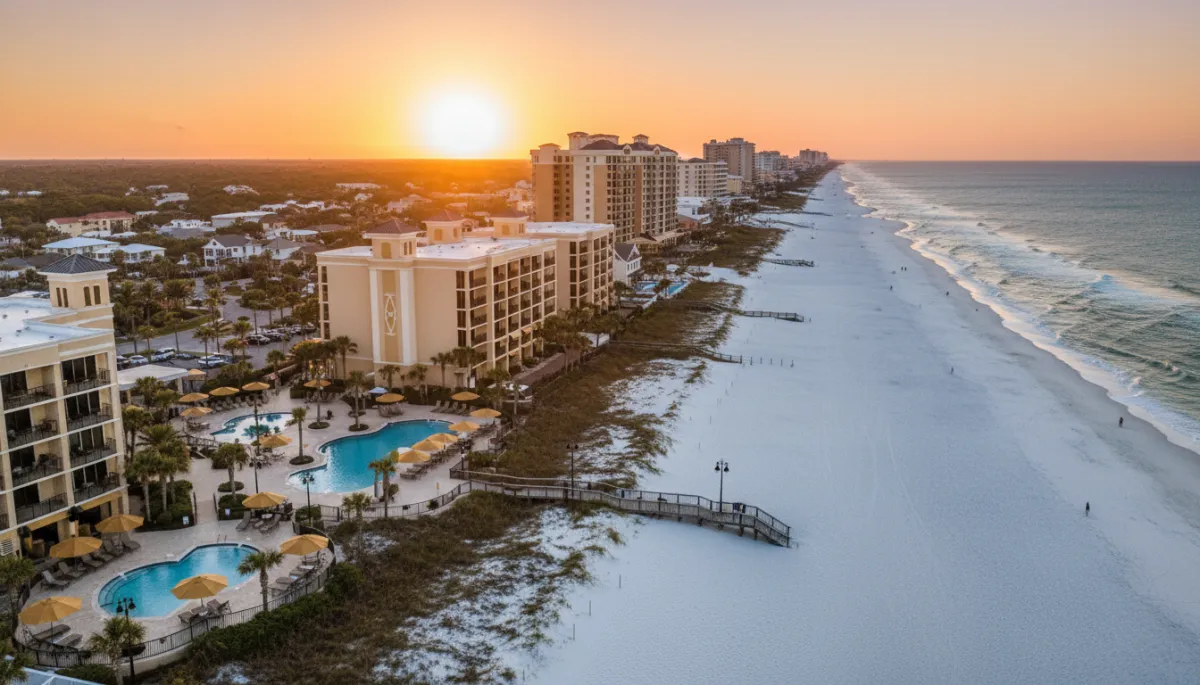
Well-funded HOA budgets keep pools, clubhouses, and landscaping looking resort-quality year-round.
Real HOA Fee Ranges by Property Type in Northwest Florida
While statewide averages are helpful, buyers in Pensacola, Destin, Fort Walton Beach, Navarre, 30A, and Panama City Beach need realistic, local ranges. Based on 2026 data and current listings, here’s what you’re likely to see for HOA fees Northwest Florida–wide, especially around the coast:
- Beachfront condos:$600–$1,400+ per month. High-rise buildings with elevators, pools, beach access, and large master insurance policies often fall in this range. Luxury towers on the sand in Panama City Beach, Destin, or Pensacola Beach may exceed $1,400 per month, especially if they include 24/7 security, covered parking, or multiple pools.
- Inland or golf-course condos and villas:$300–$600 per month. These typically have lower insurance costs than true beachfront but still offer amenities like pools, clubhouses, and gated entries—common around Destin golf communities and Fort Walton Beach.
- Single-family home HOAs:$100–$300 per month. Many Northwest Florida subdivisions have modest amenities—perhaps a community pool, playground, or simple gated entrance—so dues are often lower than condos. However, some master-planned communities with extensive amenities can run higher, especially when CDD fees are layered in.
To put this in context, recent 2026 data show the median condo HOA fee in Panama City Beach at roughly $831 per month, and the median condo HOA fee in Pensacola around $670 per month. Both are well above many inland Florida markets, reflecting higher coastal insurance and maintenance costs. When you see HOA fees Panama City Beach or Pensacola listings in this range, they’re often in line with regional norms—though you should still verify what’s included and how well reserves are funded.
What Are CDD Fees in Florida and How Do They Affect Your Budget?
Many newer master-planned communities in Florida, including some in Northwest Florida, are built within a Community Development District (CDD). A CDD is a special-purpose local government that finances and maintains infrastructure like roads, stormwater systems, utilities, parks, and amenities. To pay for that, the district charges CDD fees, which you’ll see as separate line items on your property tax bill, not in your monthly HOA dues.
In 2026, typical CDD fees Florida-wide range from about $1,500 to $3,500 per year, depending on the community, amenity level, and whether the original infrastructure bonds are still being repaid. For Northwest Florida buyers, that often translates to roughly $200–$300 per month in additional cost, collected through your annual property tax bill and often escrowed into your mortgage payment.
- Debt service: The portion repaying bonds used to build the community’s roads, utilities, and amenities—usually over 20–30 years. Once the bonds are paid off, this part goes away.
- Operations & Maintenance (O&M): Ongoing upkeep of landscaping, ponds, parks, and shared facilities. This continues even after the bonds are retired, though typically at a lower total cost than during the debt-service period.
Why Florida HOA Fees Are Rising in 2026
Many buyers are surprised to see how quickly association dues have climbed in recent years. Several statewide trends are affecting HOA fees Northwest Florida communities just as much as those in South Florida or Tampa Bay:
- Insurance premium escalation: After multiple storm seasons and broader insurance market turmoil, master policy premiums for coastal condos and communities have increased dramatically. Associations from Pensacola to Panama City Beach are facing double- or triple-digit percentage hikes, which must be passed through to owners via higher dues or special assessments.
- Stricter reserve requirements and inspections: Post-Surfside legislation now requires structural inspections, detailed reserve studies, and, in many cases, fully funded reserves—especially for older or taller condo buildings. That means associations can no longer “kick the can” on major capital projects, and monthly dues are being recalibrated upward to meet these legal obligations.
- Inflation in labor and materials: Everything from pool chemicals and landscaping to elevator repairs and concrete restoration costs more in 2026 than it did just a few years ago. HOAs must adjust budgets to keep up, especially in high-maintenance coastal environments.
On top of these market forces, Florida’s legal framework gives boards significant authority to raise dues. Under Florida Statute 720.3085, many HOAs can increase assessments by up to 115% of the previous year’s budget without a full membership vote, depending on how the governing documents are written. Recent legislative changes, including bills like HB 913, have focused on transparency, reserves, and accountability—but they can also lead to higher required funding levels as associations comply with new rules.
What to Review Before Closing on a Home or Condo with an HOA
In Northwest Florida’s competitive market, it’s tempting to focus on price and view alone—especially when you fall in love with a Gulf-front balcony or a brand-new 30A townhome. But before you close, it’s critical to dig into the association’s health. Here’s what to review carefully with your agent, attorney, or financial advisor:
- HOA governing documents: Request and read (or have a professional review) the Declaration of Covenants and Restrictions, Bylaws, and Rules and Regulations. These spell out what’s covered by dues, what the association can charge, rental rules, pet policies, parking restrictions, and enforcement powers—especially important if you plan short-term or seasonal rentals near the beach.
- Most recent reserve study and budget: A professional reserve study estimates the remaining useful life and replacement cost of major components (roofs, elevators, balconies, seawalls, etc.). Compare this to the association’s current reserve balance. If reserves are far below recommended levels, future special assessments or steep dues increases are more likely—especially in older coastal condos along Destin, Pensacola, or Panama City Beach.
- Pending or recent special assessments: Ask in writing whether any special assessments have been levied or are under consideration. A building that just completed a major restoration with a one-time assessment might be in better shape than one that hasn’t addressed known issues yet but will need to soon.
- HOA meeting minutes (12–24 months): Minutes reveal owner concerns, deferred maintenance, legal disputes, and board dynamics. Repeated discussions about “rising insurance,” “structural repairs,” or “unfunded reserves” are important clues about what’s coming next for HOA fees Destin, Pensacola, or anywhere along the coast.
- Flood zone and insurance confirmation: Verify the property’s flood zone, whether the association carries flood coverage on common areas or buildings, and what you’ll need to carry personally. In some coastal locations, flood insurance can be as impactful as HOA dues on your monthly budget.
HOA Red Flags to Watch For in Northwest Florida
Not all HOAs are created equal. Some are well-run, well-funded, and add tremendous value to your property. Others can become a financial headache. As you evaluate HOA fees Northwest Florida communities, keep an eye out for these warning signs:
- Very low dues for the age and type of property: A 30-year-old beachfront condo with “bargain” HOA dues is usually underfunded. Low fees today can mean large special assessments tomorrow, especially with new reserve and inspection laws coming online in Florida.
- Minimal or no reserves: If the reserve fund is small relative to projected capital needs, especially for big-ticket items like roofs, elevators, and concrete restoration, expect future financial shocks. This is particularly critical in salt-air environments along the Gulf Coast, where structures age faster than inland properties.
- Ongoing litigation: Check for lawsuits involving the association—especially those related to construction defects, structural issues, or disputes with contractors and insurance carriers. Litigation can limit financing options and lead to big legal bills that owners ultimately pay for through higher dues or assessments.
- Frequent, large special assessments: Occasional assessments for major upgrades aren’t always bad, but a pattern of big assessments every few years suggests poor planning or chronic underfunding. Review past years’ history to see whether the board is proactive or reactive.
- Poor visible maintenance: Peeling paint, rusted railings, cracked stucco, stained ceilings in common areas, or neglected landscaping tell you the story before you even open the financials. If what you can see is ignored, what you can’t see may be worse.
FAQ: HOA and CDD Fees for Northwest Florida Homebuyers
Are HOA fees in Northwest Florida higher than the rest of Florida?
Often, yes—especially for coastal condos. While statewide averages run in the $391–$490 per month range, many Gulf-front buildings in Destin, Pensacola Beach, and Panama City Beach exceed that because of elevated insurance costs, structural reserve requirements, and resort-style amenities. Inland single-family communities may be closer to statewide norms or slightly below, depending on amenities and whether a CDD is involved.
Are high HOA fees always bad?
Not necessarily. High dues can reflect strong reserves, robust insurance coverage, and well-maintained amenities—all of which protect your property value and lifestyle. The key is whether the fees are justified by what they cover and whether the association is financially healthy. A slightly higher fee in a well-funded building can be safer than a low fee in an underfunded one.
How do CDD fees differ from HOA fees?
HOA fees are paid to the association and cover day-to-day operations, maintenance, amenities, and reserves. CDD fees Florida communities charge are government assessments that appear on your property tax bill to pay for infrastructure and long-term maintenance of the district. Many buyers in newer Northwest Florida developments will pay both HOA dues and CDD fees, so it’s important to factor both into your budget.
Can HOA fees in Florida go up without owners voting?
In many cases, yes. Depending on the governing documents, Florida law (including Statute 720.3085) may allow boards to increase assessments up to a certain percentage—often up to 115% of the previous year’s budget—without a full membership vote. That’s why reviewing past budgets and meeting minutes is so important; it helps you understand the board’s history of increases and their reasons for doing so.
Will rising HOA fees make it harder to get a mortgage?
They can. Lenders look at your total monthly obligations—principal and interest, property taxes, insurance, HOA dues, and any known CDD fees—when calculating your debt-to-income ratio. A condo with $1,000 per month in dues might push you outside your qualifying range even if the purchase price is reasonable. Working with a local lender and agent who understand HOA fees Northwest Florida norms can help you target communities that fit your budget and loan requirements.
Ready to Navigate HOA and CDD Fees with Confidence?
Buying along Florida’s Emerald Coast should feel exciting—not overwhelming. Understanding HOA fees Destin, HOA fees Pensacola, HOA fees Panama City Beach, and potential CDD fees Florida communities charge is a crucial step toward choosing the right property and protecting your long-term investment. But you don’t have to decode budgets, statutes, and reserve studies on your own.
The Schultz Team works every day with buyers and sellers across Pensacola, Destin, Fort Walton Beach, Navarre, 30A, and Panama City Beach. We know which buildings have strong reserves, which neighborhoods carry CDD assessments, and how to compare two seemingly similar properties that have very different monthly costs. Our goal is simple: help you enjoy the Northwest Florida lifestyle you want—beachfront, bayside, or golf-course—without unpleasant financial surprises.
If you’re considering a move or an investment property along the Emerald Coast, let’s talk through the numbers together. We’ll walk you through specific HOA and CDD fees for any home or condo you’re considering and help you decide what makes the most sense for your budget, lifestyle, and long-term plans.
Contact The Schultz Team today to schedule a consultation, request a custom list of properties with transparent HOA and CDD information, or get a second opinion on a community you’re already considering. With the right guidance, you can enjoy the sun, sand, and Gulf views—confident that your monthly costs are as comfortable as your new home.